

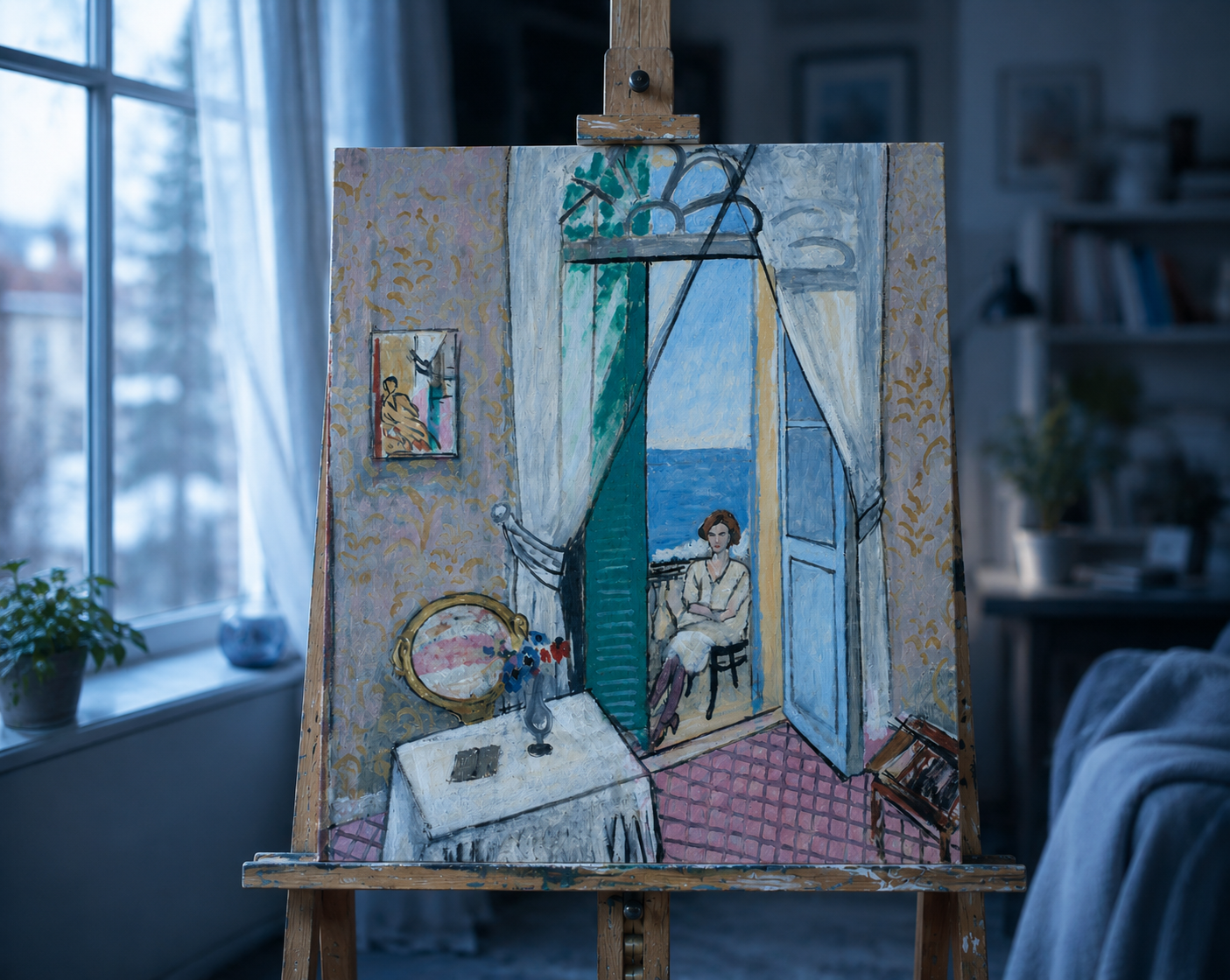
Have you ever found yourself staring at a blank canvas, paralyzed by the fear of making a mistake? Many artists get trapped in the "perfectionism loop"—the belief that success means recreating a scene exactly like a photograph. But what if the point of painting isn't to copy reality, but to express how a moment actually feels?
If you are ready to break free from the constraints of realism and unleash your creative voice, it's time to meet the movement that changed everything: Fauvism.
The Philosophy of the "Wild Beasts"
In the early 20th century, a group of rebellious artists—including Henri Matisse and André Derain—shocked the traditional art world. Critics were so startled by their raw, untamed style that they dubbed them Les Fauves (The Wild Beasts).
Instead of blending colors smoothly and matching the real world, these artists used color as a direct line to emotion. They realized that a sky didn't have to be blue, and a street didn't have to be grey. If a Mediterranean village felt radiant, sun-baked, and alive, they would paint the ground blazing orange, the shadows deep violet, and the houses a vibrant, joyous pink.
They weren't painting what they saw; they were painting their emotional experience.
Liberating Your Palette: Color Over Form
Choosing colors based on intuition rather than accuracy is incredibly liberating. When you stop worrying about whether a color is "right," you open the door to pure creativity.
Think about a landscape or a cityscape that inspires you. Instead of reaching for local color (the actual color of the object), ask yourself:
- What is the mood of this place?
- Which colors make my eyes dance?
If an old wooden door feels mysterious, paint it a rich, electric indigo. If a sunlit wall feels warm and welcoming, wrap it in a brilliant cadmium yellow. When you let color take the driver's seat, the structure of the painting becomes a playground rather than a cage.
Embrace the Texture: The Power of the Brushstroke
Fauvism isn't just about bold colors; it's about the physical act of painting. This style celebrates the hand of the artist.
Instead of meticulously blending your paint until the surface is flat and seamless, leave your brushstrokes visible. Thick, deliberate marks of oil or acrylic paint add energy, movement, and a beautiful tactile quality to your work. A visible brushstroke shows the viewer the exact rhythm of your hand and the confidence of your choice. It transforms the canvas from a passive window into a living, breathing surface.
Today's Creative Challenge: The "Wild Color" Exercise
Ready to channel your inner "Wild Beast"? Try this simple exercise today:
- Find a reference image: Take a photo of a simple everyday scene—a potted plant on your windowsill, a staircase, or a corner of a room.
- Hide the original colors: Look at the image, but completely banish its real colors from your mind.
- Paint with pure intuition: Recreate the scene using only your favorite, most vibrant colors. If the leaves are green in real life, make them bright magenta or crimson. Focus on thick, expressive brushstrokes and let the paint build up texturally.
Step back and look at the result. You might just find that by ignoring reality, you've captured something much deeper: your own unique artistic soul.
Ready to Go Beyond the Exercise?
If today's challenge lit something up in you, imagine what 13 days of guided practice could do. In my course, you'll learn how to apply exactly this kind of bold, intuitive color choice — plus real technique, brushwork, and composition — to create three finished paintings you'll be proud to sign and frame.
✨ Begin Your 13-Day Art Healing Journey Here 🎨
Until next time... please keep creating.
#Tags: #ArtEducation #Fauvism #ModernArt #OilPainting #ColorTheory #ExpressiveArt #CreativeFreedom #ArtInspiration #PaintIntuitive
Share:
Destroying the 'Inner Critic': Why Mistakes in Modern Art Don't Exist
Why Your Brain Craves a Finished Painting (Not a Finished Coloring Page)
1 comment
fauvism the name of this style is very interesting. I like matiness art