

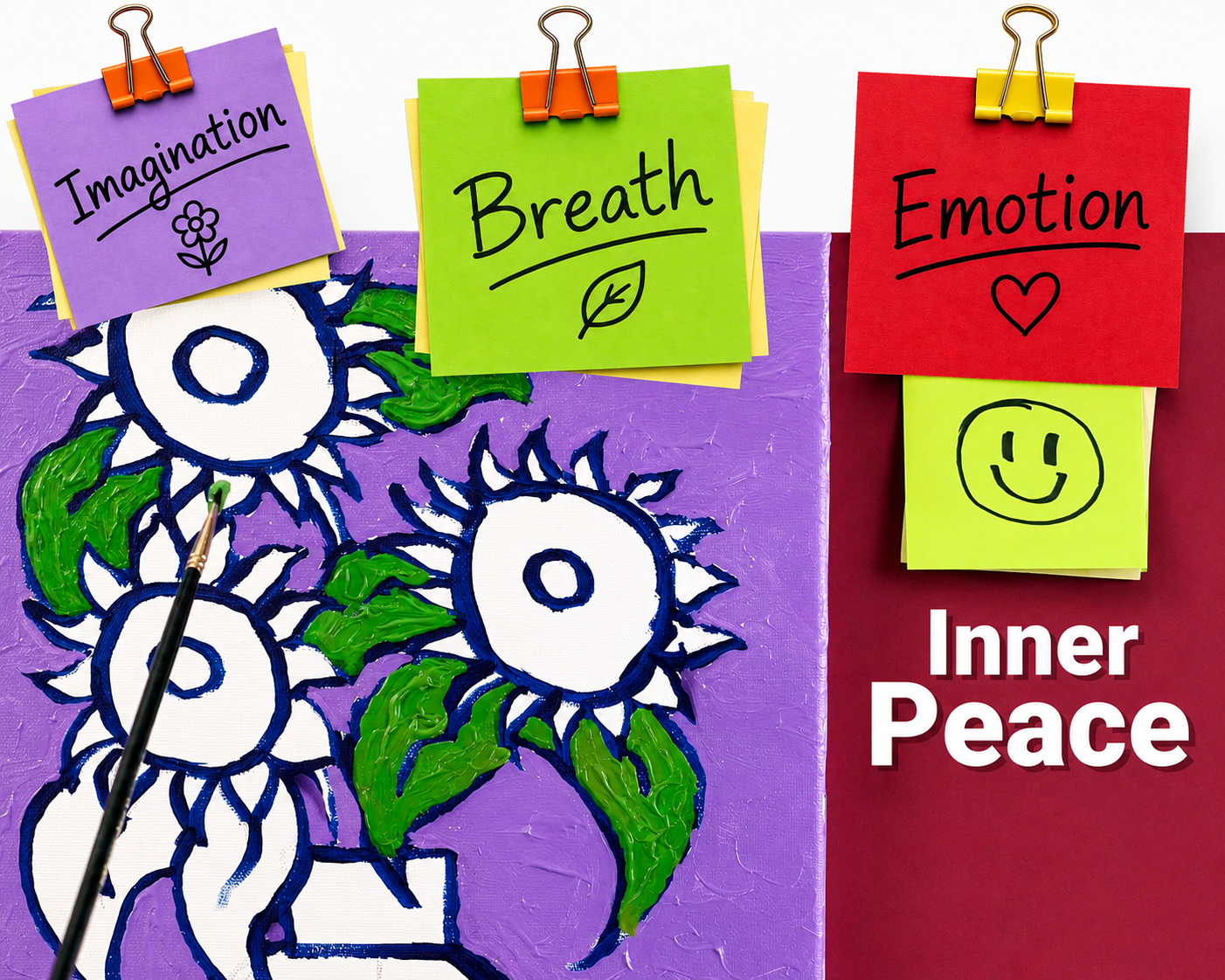
By 7:14 p.m., a lot of adults are still carrying the day in their shoulders.
The laptop is closed, but the mind is not. You tell yourself you should relax, yet scrolling leaves you more overstimulated than restored. That is where a beginner modern painting course can feel surprisingly different. It gives your evening a shape, your attention a place to land, and your nervous system a quieter rhythm to follow.
Modern painting appeals to beginners for a simple reason: it does not ask you to copy perfection. It asks you to notice color, movement, texture, and space. That makes it an ideal creative practice for people who want something beautiful and structured, without the pressure that often comes with traditional art training.
Why a beginner modern painting course works so well for stressed adults
Many people assume they need more free time, more talent, or more motivation before they can start painting. Usually, that is not the real issue. The harder problem is mental residue. After a full day of decisions, deadlines, and digital noise, your brain does not want another performance-based task. It wants a gentle transition.
A good course provides that transition because it removes the hardest part of starting: uncertainty. You do not need to decide what to paint, which brush to use, or how to begin. The structure is already there. That matters more than most people realize.
When a lesson is broken into manageable stages, painting becomes less about artistic identity and more about sensory focus. You mix a color. You follow an outline. You build one layer, then another. The mind settles because the next step is clear. For professionals who spend all day reacting, that kind of guided attention can feel deeply relieving.
There is also a quiet emotional benefit to making something with your hands after hours spent inside screens and meetings. You see progress in real time. The canvas changes because you touched it. That physical evidence of presence can help restore a feeling many adults miss by the end of the week: I am here, and I am not rushing.
What to look for in a beginner modern painting course
Not every course is beginner-friendly just because it says so. Some lessons move too quickly, rely on art-school language, or assume you already understand composition and brush control. If your goal is to create calm, those gaps matter.
The best beginner modern painting course starts with simplicity, but not in a childish way. It respects that you are new while still offering an elevated experience. Clear demonstrations, thoughtful pacing, and visually soothing projects make a real difference. You want lessons that guide you through outlines, color mixing, layering, and finishing details without making you feel tested.
High-quality video instruction helps too, especially for visual learners. Being able to see the exact amount of paint on the brush, the direction of a stroke, or the softness of a blend removes guesswork. That lowers frustration, which is essential if painting is meant to become a restorative habit rather than another abandoned self-improvement attempt.
Project style matters as much as teaching style. Modern paintings tend to be more approachable because they lean into shape, texture, contrast, and mood. They leave room for interpretation. That is useful for beginners, since small variations can still look intentional and refined.
It also helps when the course feels designed for real evenings, not idealized weekends. A lesson that can be completed in a calm, contained session is far easier to return to than one that asks for a full afternoon of setup and stamina.
The difference between learning art and building a ritual
This is where many courses miss something important.
If a program only teaches technique, it may help you paint one piece. If it supports a repeatable rhythm, it can change how your evenings feel. The distinction is subtle, but powerful. One gives you information. The other gives you a practice.
A calming course invites you to prepare your space, settle your breathing, and move through each step without urgency. It does not frame mistakes as failures. It treats them as part of the process of arriving. That tone matters, especially for people whose workdays already demand constant precision.
When painting becomes a ritual, the value extends beyond the final artwork. You begin to associate your evenings with softness instead of depletion. You protect your personal sanctuary a little more intentionally. Over time, that can become one of the most meaningful reasons to keep going.
What you actually learn in a beginner modern painting course
Beginners often worry they need natural talent. In practice, confidence grows from repetition and clear instruction, not from innate ability.
Most modern painting courses for beginners should teach a few foundational skills in a very direct way. You learn how to read the composition so the painting feels balanced. You learn how to create or follow outlines so the blank canvas feels less intimidating. You practice color mixing so you can achieve depth without overcomplicating your palette. You also learn brushwork and layering, which are often the difference between a flat result and a piece that feels finished.
Texture can be especially rewarding for beginners because it is tactile and forgiving. A textured surface adds dimension, catches light, and gives the painting a polished, contemporary look. It also shifts your attention from perfection to process. You are not trying to produce a flawless replica. You are building visual interest, one movement at a time.
The final details teach patience. This stage often includes refinement, highlights, edge control, and small corrections that bring the whole piece together. For many students, this is the moment a painting changes from something tentative into something they would actually display at home.
That emotional shift matters. Hanging your own work on the wall is not just about decoration. It is evidence that rest can create something lasting.
How to know if this kind of course is right for you
A beginner modern painting course is especially well suited to adults who want creativity without chaos. If you are craving a decompression routine that feels more nourishing than passive entertainment, painting may fit beautifully.
It is a strong option if you want guidance, but not pressure. If you like the idea of following a clear path and still ending up with something personal, modern painting offers that balance. It is also helpful if traditional art spaces have felt intimidating to you. You do not need to sketch perfectly, understand theory deeply, or identify as an artist to begin.
That said, it depends on what you want from the experience. If your only goal is technical realism, a modern painting course may feel too expressive. If you want a creative practice that supports emotional reset, however, it can be exactly the right place to start.
For many people, the most valuable part is not the art itself. It is the permission to stop performing for a while. To focus on one color, one shape, one brushstroke. To reclaim your evening with something that asks for attention, but not strain.
Making your first course easier to stick with
The first few sessions matter because they set the emotional tone.
Keep your setup simple. Leave your materials in one place if possible, so starting feels easy. Choose a regular time in the evening when you are less likely to be interrupted. Even 30 to 45 minutes can be enough to shift your state if the lesson is paced well.
Try not to judge the painting too early. Early layers often look unfinished because they are unfinished. Let the process unfold. The calmer you are with that middle stage, the more likely you are to enjoy returning to it.
It also helps to treat painting as care, not productivity. You do not need to optimize it. You do not need to be impressive. You are investing in your peace of mind while building a skill, and that is more than enough.
For adults who feel stretched thin, this is the quiet promise of a well-designed course: not just that you will learn to paint, but that you will remember how to come home to yourself. Brands like Outlines Soul understand that a canvas can hold more than color. It can hold the end of a stressful day, softened into something steady and beautiful.
If you have been waiting for a sign that creativity can be simple, structured, and calming, this may be it. Start with one evening, one lesson, and one finished brushstroke you did not think you could make.
Share:
Art Routine for Stress Relief That Actually Sticks