

Your workday ends, but your body does not get the message. The laptop closes, dinner is done, and somehow your mind is still racing through emails, deadlines, and conversations you wish had gone differently. An art routine for stress relief can change that pattern because it gives your nervous system a clear, physical signal that the day is over.
That is the real value of a creative ritual. It is not about becoming an artist overnight or filling your home with perfect paintings. It is about reclaiming your evening with something steady, absorbing, and quietly beautiful. When painting becomes part of your routine, stress has less room to follow you into the rest of your night.
Why an art routine for stress relief works so well
Many forms of stress management ask you to slow down in a way that can feel abstract. Sit still. Empty your mind. Breathe more deeply. Those methods can help, but they are not always easy when you are mentally overstimulated and emotionally tired.
Painting offers a different kind of relief. Your hands are busy, your eyes have something gentle to focus on, and your attention moves toward color, texture, and simple next steps. That shift matters. Instead of trying to force calm, you give your mind somewhere softer to land.
There is also comfort in structure. A guided creative practice helps reduce decision fatigue, which is often what makes evenings feel so drained. When you know what to paint, what colors to mix, and what step comes next, your brain does not have to keep performing at workday speed. It can settle.
For many adults, that is the missing piece. They do not need another productivity system. They need a ritual that marks the boundary between professional pressure and personal recovery.
The best routine is simple enough to repeat
A stress-relieving art practice does not need to be long, complicated, or ambitious. In fact, if it feels too demanding, it will not last. The most effective routine is one you can return to even on a hard day.
That usually means lowering the bar in a thoughtful way. You do not need a full studio setup or a free three-hour evening. You need a small window of time, a prepared space, and a process that feels approachable when your energy is low.
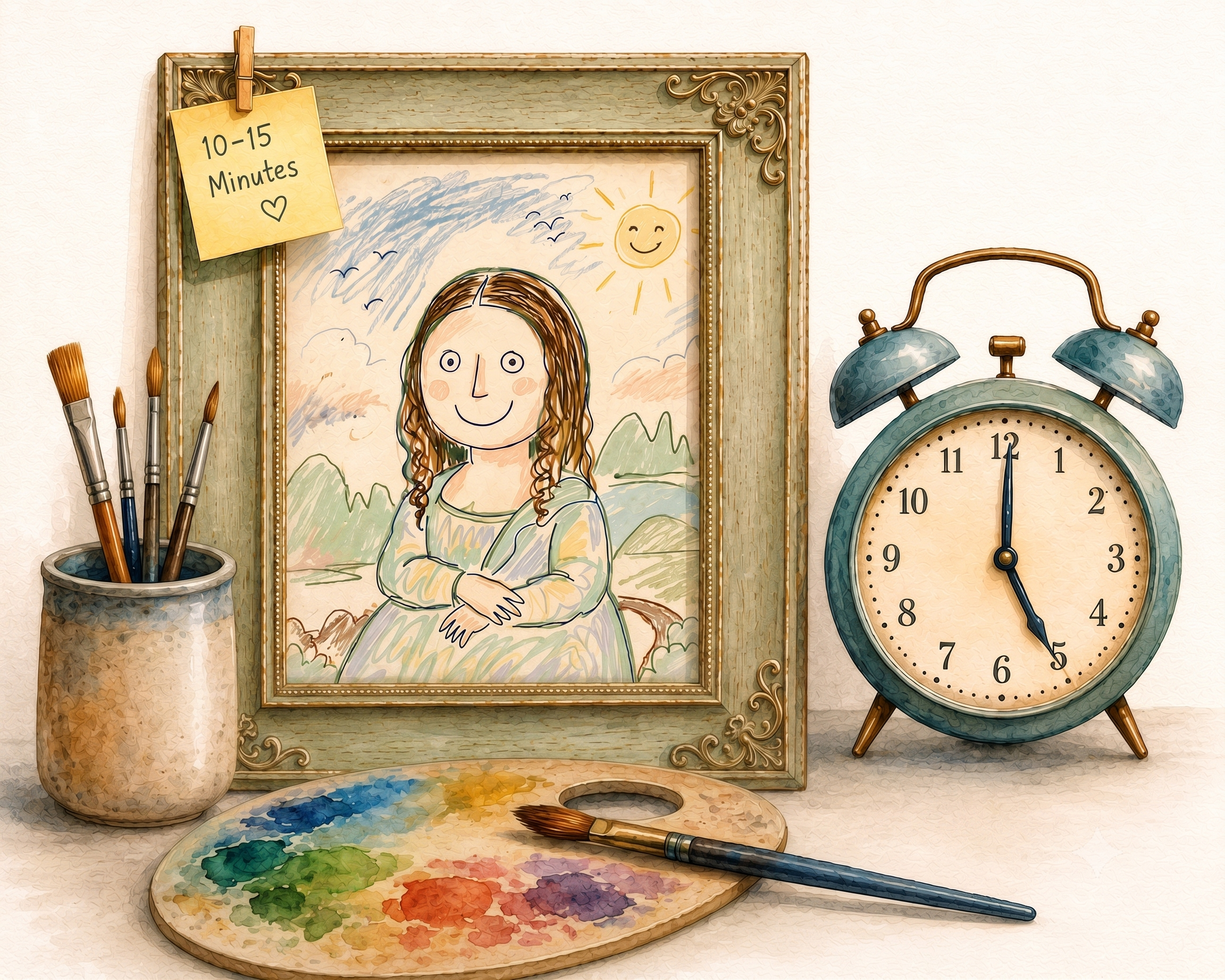
For most people, 20 to 40 minutes is enough. That is long enough to feel a real mental shift, but short enough to fit into adult life. If you are especially drained, even 15 minutes can help. The point is consistency, not intensity.
It also helps to choose painting over open-ended art experiments when stress relief is the goal. Painting gives you a tactile, rhythmic experience and a visible sense of progress. That can feel grounding in a way that endless choices often do not.
How to build an art routine for stress relief at home
Start by choosing a specific time. The more vague the plan, the easier it is for work or scrolling to fill the space. A routine attached to a natural moment in your evening tends to hold better. That might be right after changing out of work clothes, after dinner, or just before your usual wind-down hour.
Next, create a visual cue in your space. Leave your brushes in a jar, set out your paint, or keep a canvas ready on a small table. You are making it easy for your future self to begin. When everything is hidden in drawers and closets, starting feels like another task. When your setup is ready, the routine feels welcoming.
Then decide what kind of painting experience you want. If your goal is peace, choose projects with clear guidance and a calm pace. Beginner-friendly modern painting works especially well because it combines simplicity with beauty. You can focus on one outline, one section of color, one layer of texture. That step-by-step rhythm is part of what makes the routine soothing.
Keep your opening ritual short and consistent. You might dim a bright overhead light, put your phone away, wash your hands, and sit down with tea or water nearby. Small sensory signals tell your body that this is a protected part of the evening. Over time, those signals become powerful.
Finally, end before you feel depleted. This is one of the most overlooked parts of building a lasting routine. Stop while the experience still feels restorative. Leave one small step for tomorrow if you want a reason to return.
What to do during your painting session
You do not need to chase a deep, meditative state. A more realistic goal is gentle absorption. Let the session hold your attention just enough that your thoughts stop gripping so tightly.
Begin with the easiest part of the painting. Outline a shape. Mix one color. Fill in a background area. Simple actions create momentum, and momentum lowers resistance. If you start with the most technical detail, stress can follow you right to the canvas.
As you work, try to keep the focus on process rather than evaluation. Notice the feel of the brush, the change in color as you layer paint, the quiet satisfaction of completing one section. This is not about proving talent. It is about giving your mind a healthier job.
If judgment shows up, which it often does, respond gently. You are allowed to make uneven lines. You are allowed to paint like a beginner. In fact, the routine becomes more calming when perfection is no longer the price of entry.
Some people find silence best. Others prefer soft instrumental music. It depends on how overstimulated you are when you begin. If your day has been noisy and crowded, quieter may feel better. If your mind is restless, a soft background soundtrack can help ease the transition.
Common reasons the routine does not stick
When an evening ritual falls apart, it is usually not because you lack discipline. It is because the routine asks too much at the wrong time.
One common mistake is making the setup too complicated. If you need to gather ten supplies, clear a large surface, and decide what to paint from scratch, the routine starts to feel like another project. Reduce friction wherever you can.
Another issue is choosing goals that are too big. If every session is supposed to produce a finished piece, pressure sneaks back in. A calming art practice works better when progress is allowed to be small. One layer counts. One color study counts. Ten quiet minutes count.
It also helps to notice whether you are using painting as recovery or as another arena for performance. There is nothing wrong with wanting to improve your skills, but if every session turns into self-critique, the emotional benefit gets weaker. Sometimes the most supportive approach is a guided lesson that removes uncertainty and lets you trust the process.
That is part of why structured programs can be so effective for busy professionals. A clear sequence helps you move from mental overload into creative focus without wasting energy on planning. Outlines Soul is built around that exact shift - not just teaching painting, but helping you protect your personal sanctuary at the end of the day.
Make the routine feel like care, not another task
The most lasting evening habits feel rewarding almost immediately. They do not rely only on future results. Your art routine should feel good while you are doing it.
That may mean choosing colors that feel calming to you, working under warm light, or painting at a small scale so the process feels manageable. It may mean letting the space stay quiet and uncluttered. These details are not extra. They are part of the nervous-system reset.
It is also worth releasing the idea that stress relief must look serious to be valid. A beautiful, tactile, creative practice is not frivolous. It is one way to restore your attention, soften the intensity of the day, and return to yourself with more steadiness.
Some evenings, painting will feel deeply soothing. Other nights, it may simply help you feel a little less scattered. Both experiences matter. Relief does not have to be dramatic to be real.
If you want this routine to last, treat it as an investment in your peace of mind rather than one more self-improvement goal. That small shift changes everything. You are not trying to do more. You are creating a gentler way to come home to yourself.
Share:
Beginner Modern Painting Course That Calms
How to Paint Textured Art at Home