

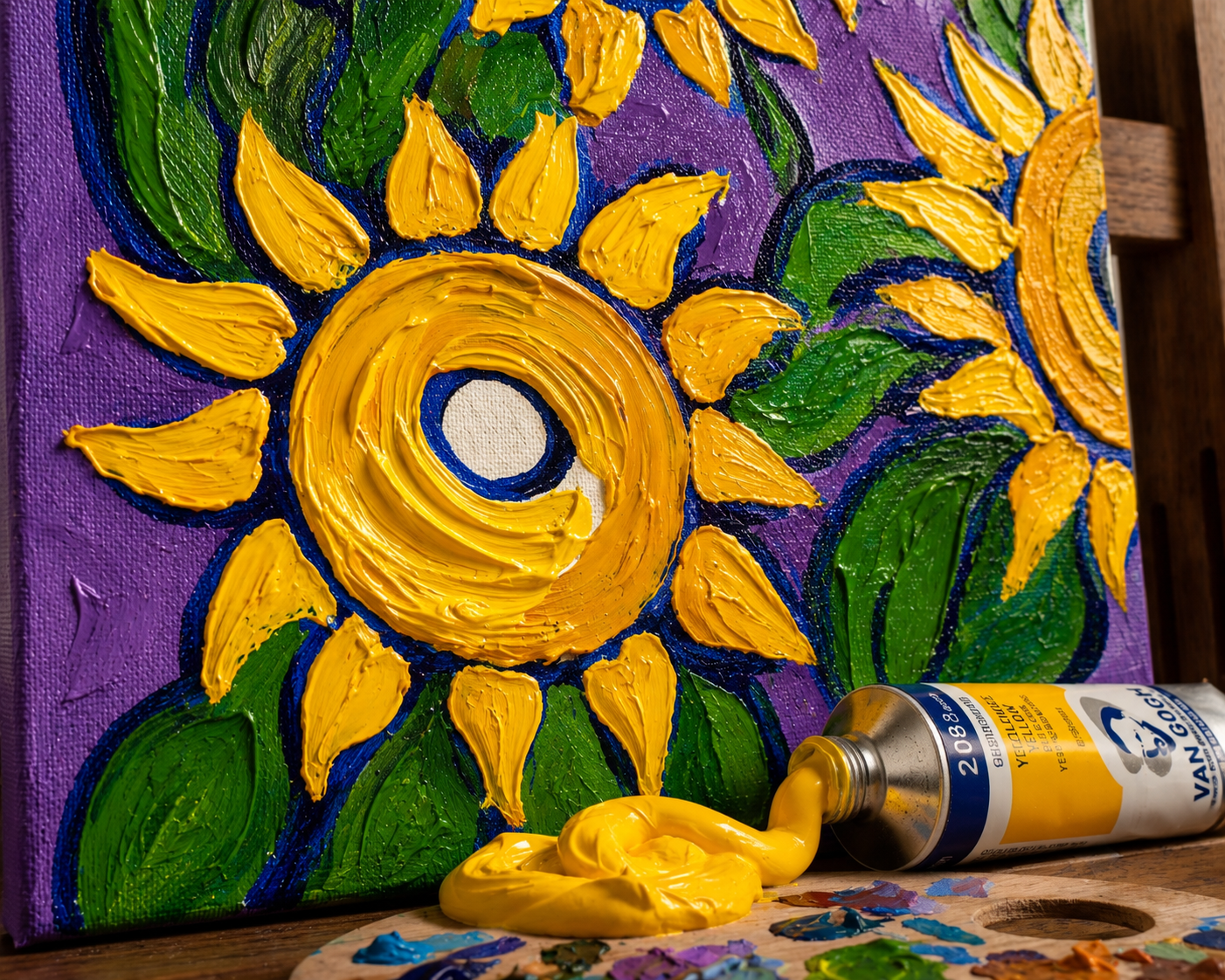
Some evenings ask very little of you. A clean canvas, a muted palette, and the slow drag of a palette knife can be enough to quiet the noise of the day. If you have been wondering how to paint textured art, the good news is that it is far more approachable than it looks - and often more calming than traditional painting because you can focus on movement, layering, and feel instead of tiny details.
Textured art is especially satisfying for beginners because it does not demand perfect lines or advanced drawing skills. It gives you structure without pressure. You build dimension, shape, and softness with material itself, which means the process can feel grounded and forgiving from the very first layer.
What textured art really is
Textured art uses thickness and raised surfaces to create visual depth. Instead of relying only on color shifts or shading, you physically build the painting outward. That can mean smooth plaster-like ridges, soft sculptural curves, subtle grain, or bold knife marks that catch light across the surface.
In most modern beginner pieces, texture comes from acrylic modeling paste, texture paste, or heavy body paint. These materials hold their shape as they dry, which lets you create movement that stays visible. The finished result feels minimal, elevated, and tactile - especially in neutral tones and soft organic shapes.
That is part of the appeal. Textured art looks refined, but the actual process is slow and repetitive in the best way. For anyone trying to reclaim their evening after work, it can become a simple ritual that brings your attention back to your hands, your breath, and the room you are in.
How to paint textured art without overcomplicating it
The easiest way to begin is to keep both your materials and your design simple. You do not need a full studio setup. You need a canvas, a texture medium, acrylic paint if you want color, and one or two tools for spreading and shaping.
A stretched canvas or canvas board works well for beginners. For texture, modeling paste is often the most flexible choice because it is thick, beginner-friendly, and dries with enough body to hold knife marks. A palette knife is ideal, but a spreader or even a firm plastic card can work when you are starting.
For color, many people prefer warm whites, sand, taupe, clay, or soft gray because these shades highlight texture beautifully. Brighter color can also work, but it tends to make the piece feel more expressive and less quiet. Neither is wrong. It depends on whether you want your painting to energize a room or soften it.
Before you start, protect your surface and take a moment to choose a direction. Abstract waves, arches, florals, and layered sweeping shapes are all approachable. If making design decisions feels stressful, choose one repeated form and let that carry the piece.
Start with a loose composition
One of the biggest mistakes beginners make is trying to invent the whole artwork while the paste is already drying. It helps to sketch a few broad lines on the canvas first. Keep them light and simple. You are not drawing a finished image. You are just giving yourself a calm path to follow.
If you want a modern textured look, leave open space. Not every inch needs to be covered. Negative space is part of what makes this style feel sophisticated.
Mix carefully and work in sections
If you want colored texture, mix a small amount of acrylic paint into your paste before applying it. This gives you an even tone throughout the raised areas. If you would rather paint after the texture dries, that works too. Painting later can give you more control over the final color, while mixing first can make the process feel smoother and more intuitive.
Then begin applying the paste in sections. Scoop a small amount onto the canvas and spread it with your knife. Use gentle pressure for flatter texture and a lighter hand for thicker peaks and ridges. Pull the tool in one direction if you want the piece to feel orderly and calm. Curve the motion if you want softness and movement.
This is where textured painting becomes meditative. You do not need to rush. In fact, the finish usually looks better when your marks are intentional and unforced.
Techniques that make textured art look polished
There are many ways to build surface interest, but a few simple approaches tend to give beginners the best results.
The first is the smooth sweep. This involves dragging a palette knife in long, curved motions to create raised bands or petal-like shapes. It feels elegant and controlled, and it works beautifully for neutral abstract pieces.
The second is layered scraping. You apply a thicker area of paste, then remove some of it with the edge of your tool. This creates variation, which helps the surface catch light more naturally. It is a good option when a piece starts looking too flat or uniform.
The third is stippling or pressing. Instead of sweeping, you press the paste to create a more organic texture. This can be useful for floral centers, stone-like effects, or areas where you want subtle contrast without dramatic lines.
When learning how to paint textured art, it helps to remember that consistency matters more than complexity. One repeated texture done with care usually looks more refined than five techniques competing on the same canvas.
Let drying time do its job
Texture needs patience. Thick paste can take many hours to dry and sometimes longer if the layer is heavy. If you paint over it too soon, you can flatten the texture or cause cracks where the underlayer has not set.
That does not mean you need to watch it nervously. It simply means the process has a natural pause built into it. For many people, that pause is part of the experience. You create, step away, and return later with fresh eyes.
If cracking happens, do not assume the piece is ruined. Small cracks can add character, especially in abstract work. If the cracking is severe, the layer may have been too thick or dried unevenly. Next time, apply slightly thinner sections or build your texture gradually.
Should you paint before or after the texture dries?
This is one of those places where it depends on the look you want.
If you mix color into the paste or tint it before it dries, the final result feels soft, integrated, and modern. Everything looks unified because the color runs through the texture itself. This is often the easiest route for beginners who want a clean, minimal finish.
If you wait until the texture dries and paint over it after, you can emphasize the ridges and valleys more dramatically. Dry brushing a lighter tone across the raised areas can be especially beautiful. It brings out depth and gives the artwork more contrast.
For a calm, premium look, many people prefer a restrained palette and tonal variation rather than sharp color shifts. Soft layers of ivory, beige, mushroom, or warm gray tend to highlight texture without making the piece feel busy.
Common mistakes when painting textured art
The most common issue is using too much material too quickly. Thick applications can slump, crack, or take far longer to dry than expected. Start with less than you think you need. You can always add another layer.
Another problem is overworking the surface. Once the paste starts to set, repeated smoothing can create drag marks that look muddy rather than intentional. Make your mark, then let it be.
Color choice can also change the mood more than people expect. A heavily textured surface in multiple bold tones can feel energetic, but it can also feel visually loud. If your goal is to protect your personal sanctuary and create something soothing, limit the palette and let the texture carry the interest.
Finally, do not judge the piece too early. Wet texture often looks different from dry texture, and evening light can change everything. Give the artwork a full day before deciding whether it needs more.
How to make the process feel restorative
If your real goal is not just to learn how to paint textured art but to create a ritual you can return to, the setup matters. Keep your materials visible and easy to reach. Choose a time when your workday is truly done. Let the act of preparing the canvas signal that you are stepping out of productivity mode and into personal space.
This is why beginner-friendly guidance matters so much. When the process is clear, your mind can soften. You are not wrestling with uncertainty. You are following a rhythm. That is where textured painting becomes more than decoration. It becomes a way to settle your system at the end of the day.
A structured course can help if you want that experience without trial and error. Outlines Soul approaches modern textured painting this way - not as a test of talent, but as a calming creative practice with a beautiful result at the end.
Your first textured piece does not need to be perfect to feel meaningful. It only needs to bring you back to yourself for an hour, one layer at a time.
Share:
Art Routine for Stress Relief That Actually Sticks
How Painting Rewires Your Brain to Instantly Switch Off Work Stress