

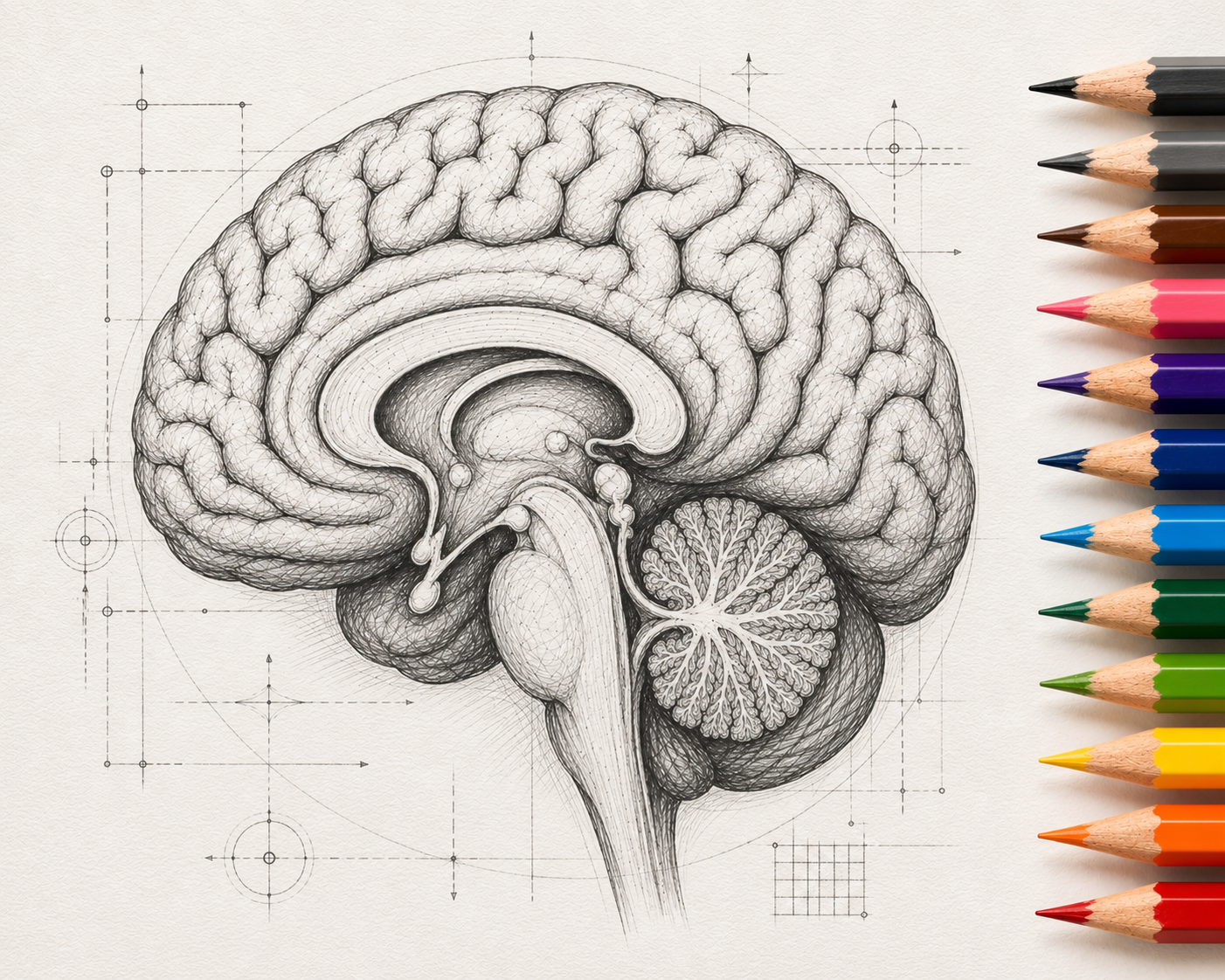
We live in a world that aggressively steals our attention the moment we wake up. Before your feet even touch the floor, your morning routine forces your sensory organs into overdrive.
Think about how you begin an average day:
-
Through your ears: You are bombarded with morning news noise, traffic jams, and immediate complaints from family or colleagues.
-
Through your eyes: You consume high-stress data, urgent spreadsheets, and an endless avalanche of unread emails.
Your brain acts as the central processor for all this incoming digital clutter. By 9:00 AM, your cognitive battery is already drained, and the line between your working life and your personal life is completely blurred.
So, how do you build a healthy boundary between work and life when your mind refuses to stop racing? The answer isn't a passive coloring book or a simple doodle—it is the intentional act of creating real art on canvas.
The Sensory Replacement: Overwriting the Morning Noise
The human brain is an incredible processing machine, but it has a built-in limitation: it cannot fully focus on two intense sensory inputs at the exact same time. When you are stressed, your mind is full of loud, analytical background noise.
When you sit down to paint a genuine piece of art, you aren't just passing the time. You are launching a total sensory replacement strategy that engages the exact same channels that stressed you out in the morning:
1. Eyes on the Canvas (Visual Replacement)
Instead of tracking moving text on a glowing screen or reading stressful emails, your eyes become entirely locked onto a physical canvas. You focus on spatial composition, the blending of tones, and the form of your subject. The digital data disappears.
2. The Sound of the Waves (Auditory Imagination)
When you paint a real subject—for example, a serene beach landscape—something magical happens in your mind. As you apply the paint, your imagination takes over. The internal memory of the sea breeze activates, and the rhythmic sound of ocean waves begins to play in your mind. Your brain physically begins to hear the landscape you are creating, completely replacing the morning complaints and office noise.
3. Engaging the Hands (Physical Calming)
The physical act of holding a brush, mixing heavy body acrylics on a palette, and feeling the resistance of the textured canvas sends a direct signal to your nervous system. This tactile engagement activates your fine motor skills, lowering your heart rate and forcing the background noise of daily stress to fade out.
Real Creation vs. Passive Coloring: True mental relief doesn't come from filling in someone else's pre-drawn lines in a coloring book or scribbling mindlessly. Real happiness and a true sense of achievement come from building a new visual reality from scratch. When you sign your name to a finished, original canvas, your brain experiences a deep surge of pride that passive crafts can never replicate.
How to Build Your Daily Art Ritual
You don't need hours of free time to create a healthy boundary. Treating art as a brief, daily transition ritual right after work can completely reset your evening.
-
Set a Transition Window: Dedicate just 15 to 20 minutes right after closing your laptop to step away from screens and approach the easel.
-
Focus on Textures: Use high-quality tools, squeeze real paint from a tube onto your palette, and focus on the physical feeling of the brush strokes.
-
Let the Subject Guide Your Mind: Paint subjects that carry an organic, sensory atmosphere , like landscapes, ocean views, or botanical structures, to let your mind wander into peaceful auditory spaces.
By training your brain to switch focus from digital consumption to physical creation, you build an unshakeable wall between your career demands and your inner peace. Stop trying to turn your brain off. Instead, give it something beautiful to build.
Share:
How to Paint Textured Art at Home
How to Stop a Toxic Workday from Destroying Your Relationships